📄 Digital book in PDF · read it on your phone or print it
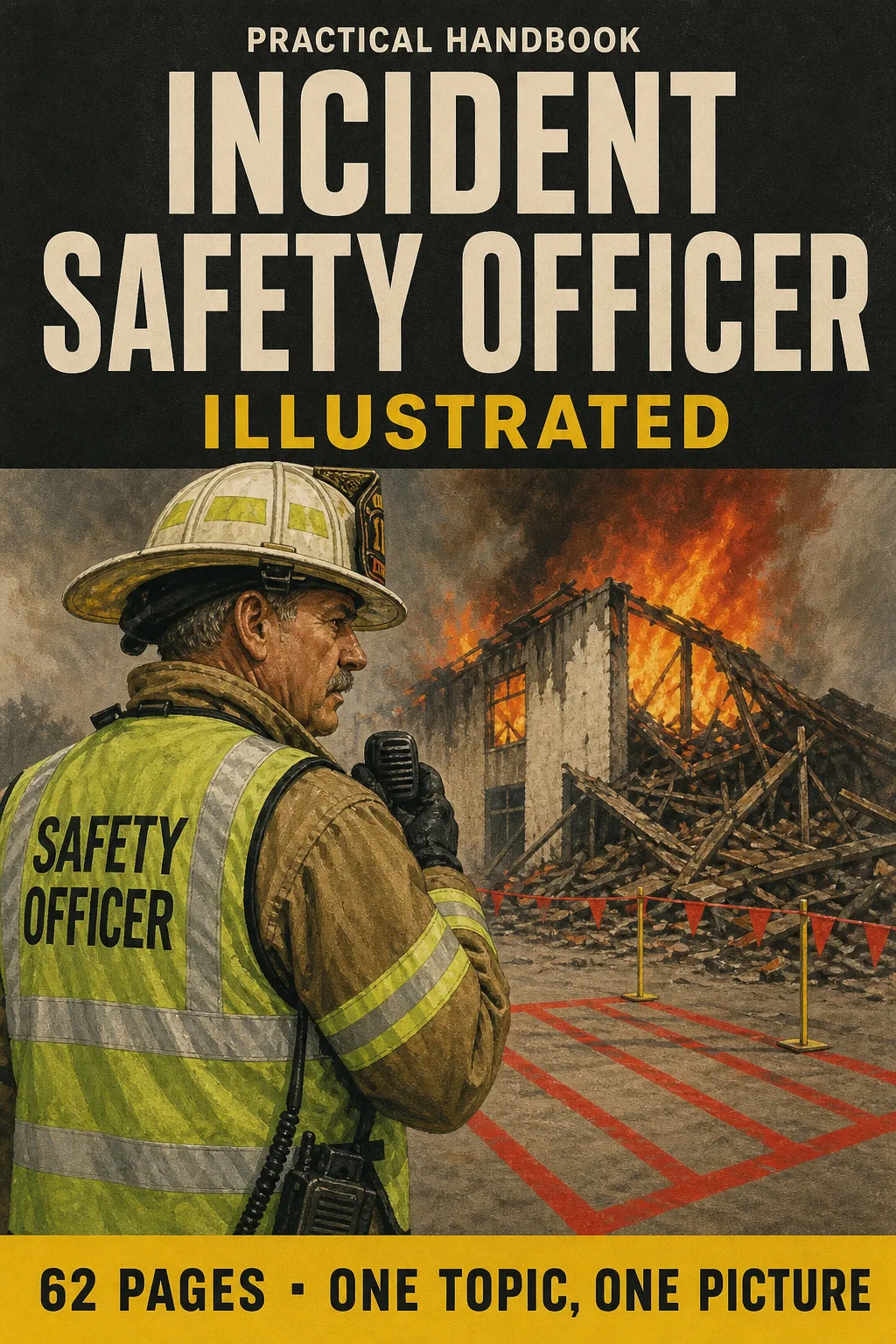
The ISO inside ICS, risk vs. benefit, the five construction types, collapse indicators and collapse zones, smoke reading, PAR and RIC, rehab, hazmat zones. Every topic has its own page: the drawing first, then what you need to remember. 62 illustrated pages.
🔒 Secure checkout · PDF by email · 30-day guarantee
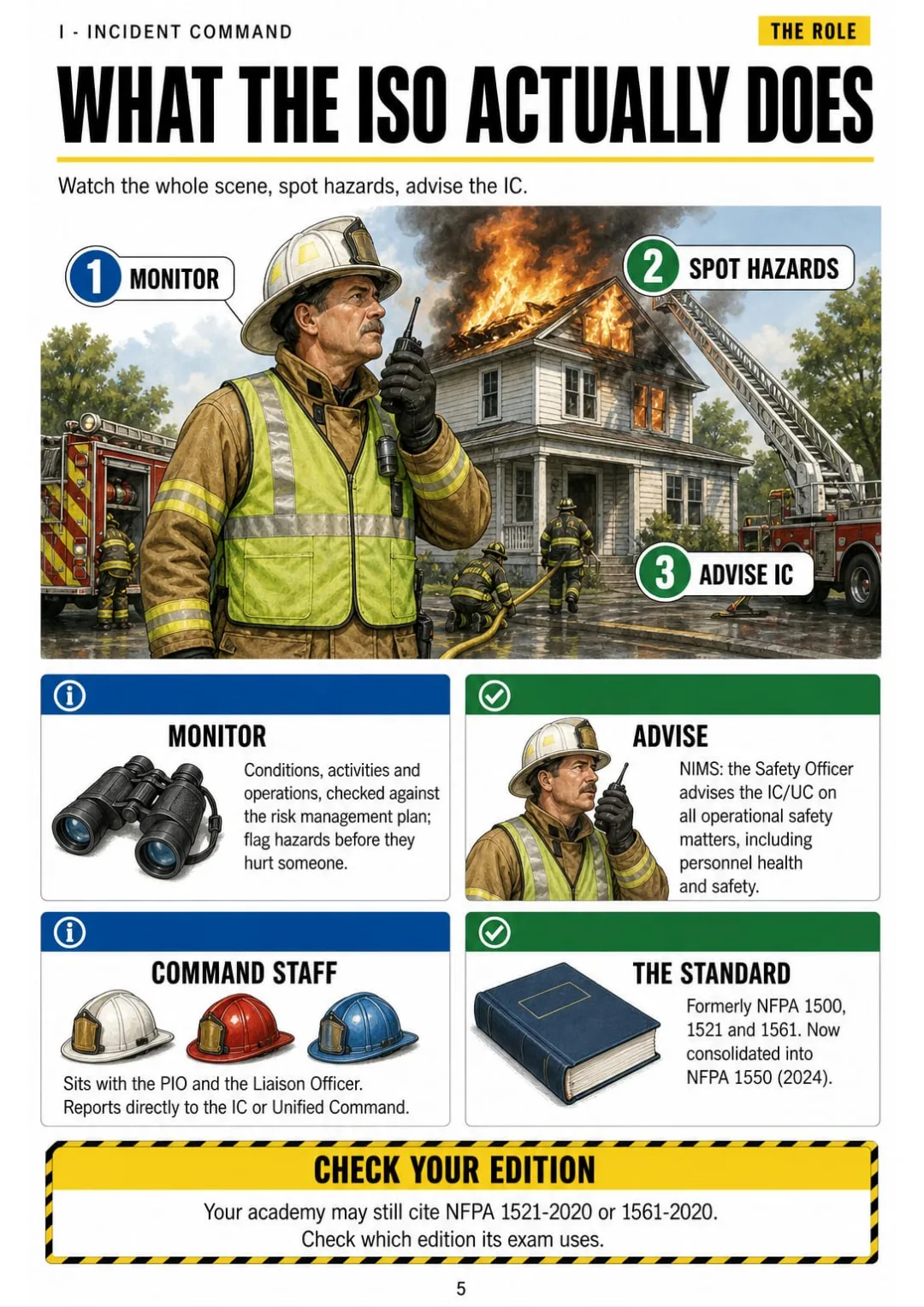
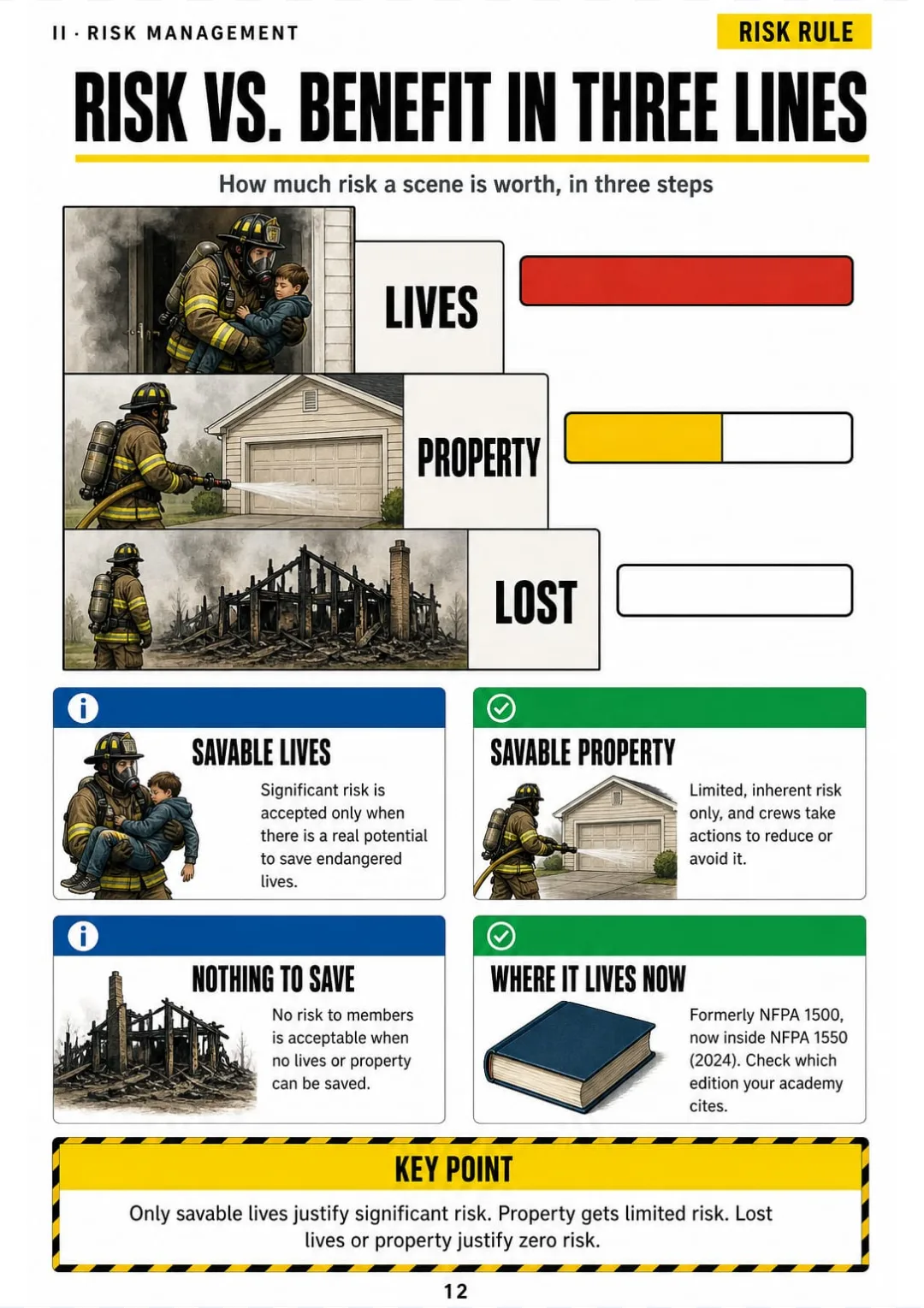
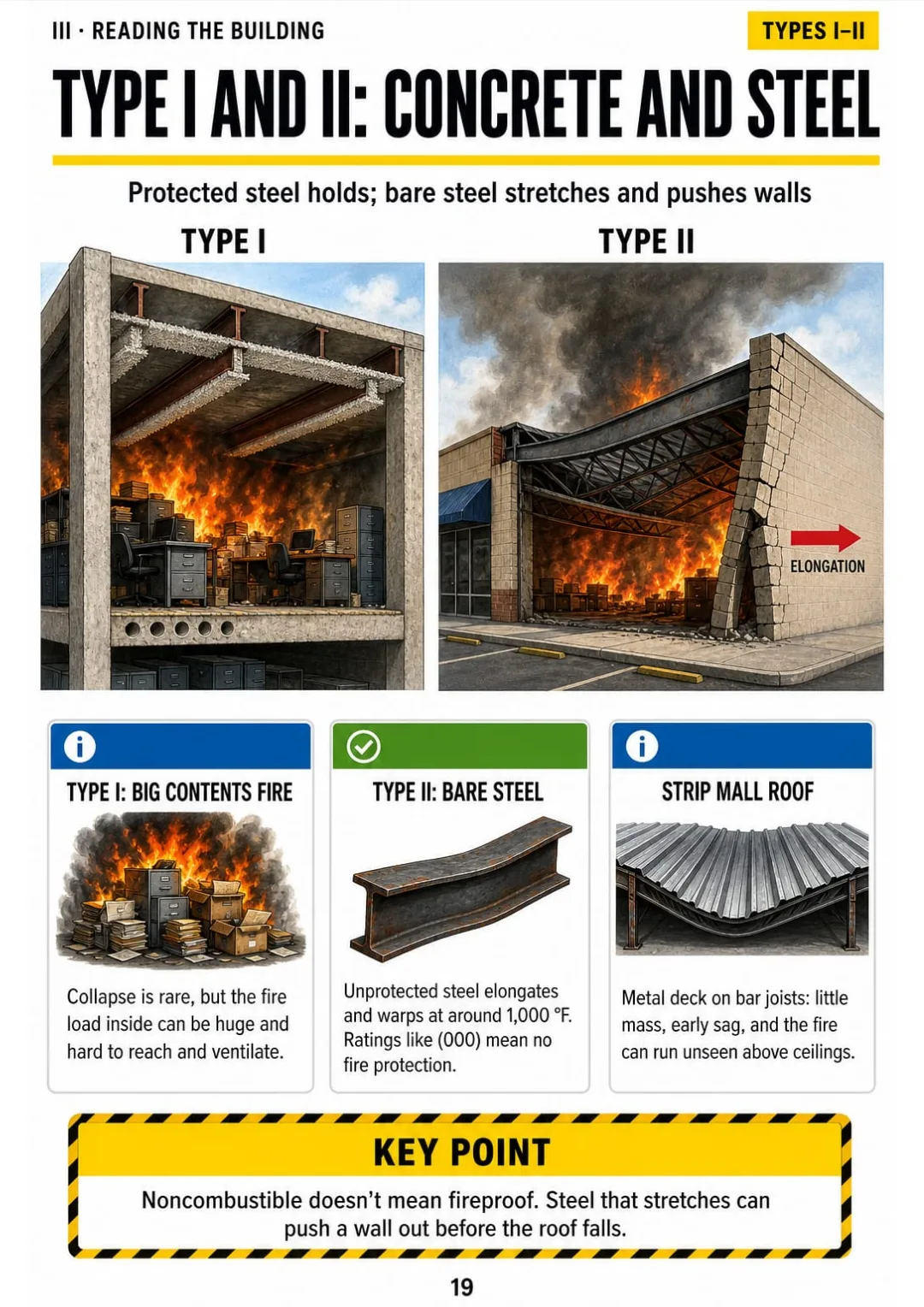
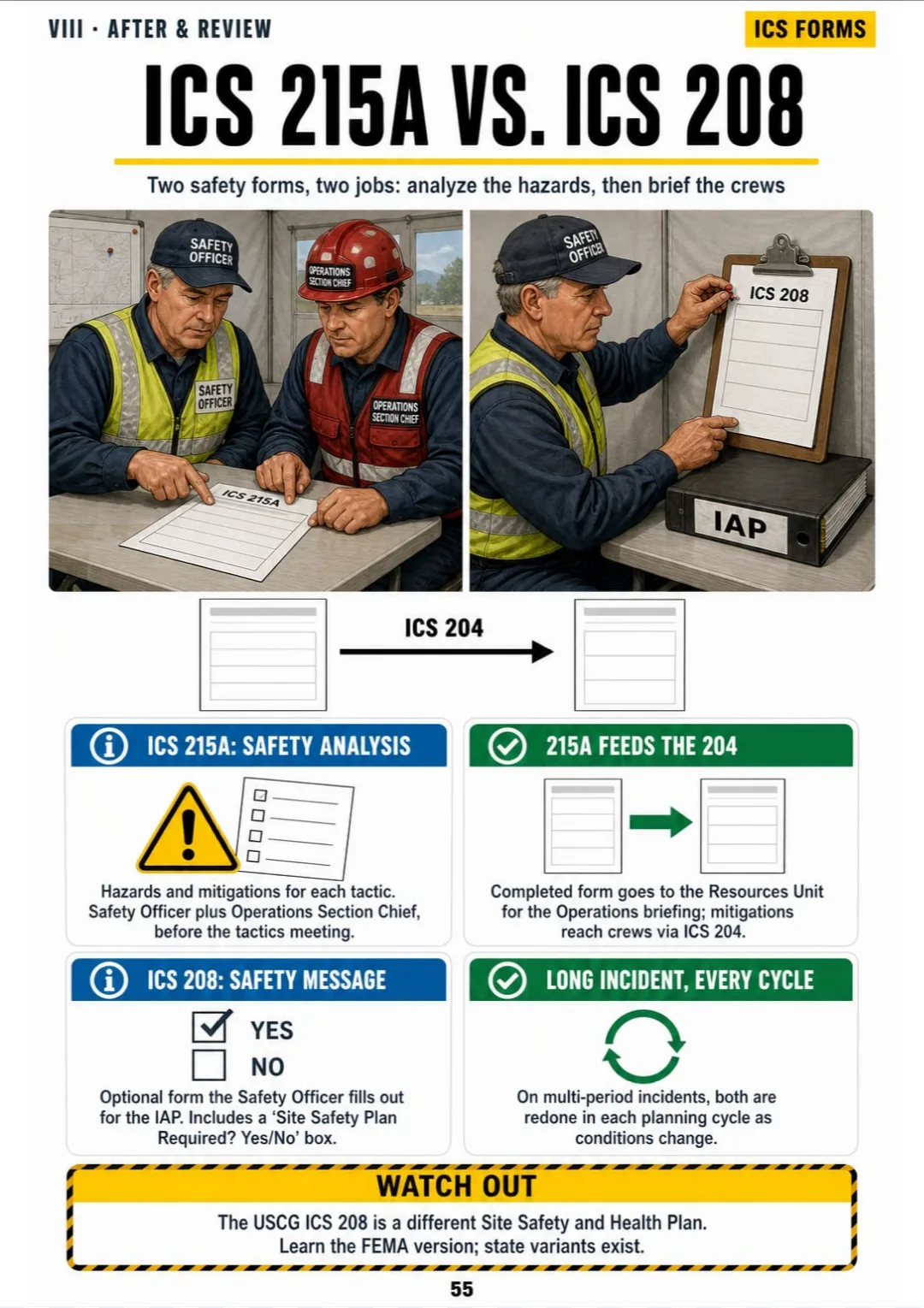
Every page has one big drawing and a box with the numbers, rules and steps you need to know:


Swipe to see more →
These are real pages from the book. The table of contents is the full one: 8 parts and 58 topics.
It's 11 p.m., you're home after a 24-hour shift, and the textbook is open to building construction. Five types, a string of three-digit codes, and none of it sticks.
The textbook covers Type I through Type V in paragraph after paragraph: fire-resistance ratings, hour values, exceptions. You've watched all of those buildings burn, but on paper they blur together.

In this book, the five types sit side by side on one page: fire-resistive, noncombustible, ordinary, heavy timber, wood frame. Each one drawn, with its NFPA 220 codes under it (442 for Type I, 000 for unprotected steel, 2HH for heavy timber) and what each of the three digits means.
The rest works the same way: collapse indicators, the collapse zone, smoke reading, PAR, hazmat zones. Each one has its own page.
So when the exam asks which type has unprotected steel, or the IC asks what you're looking at, you picture the page and answer, without going back to the textbook.
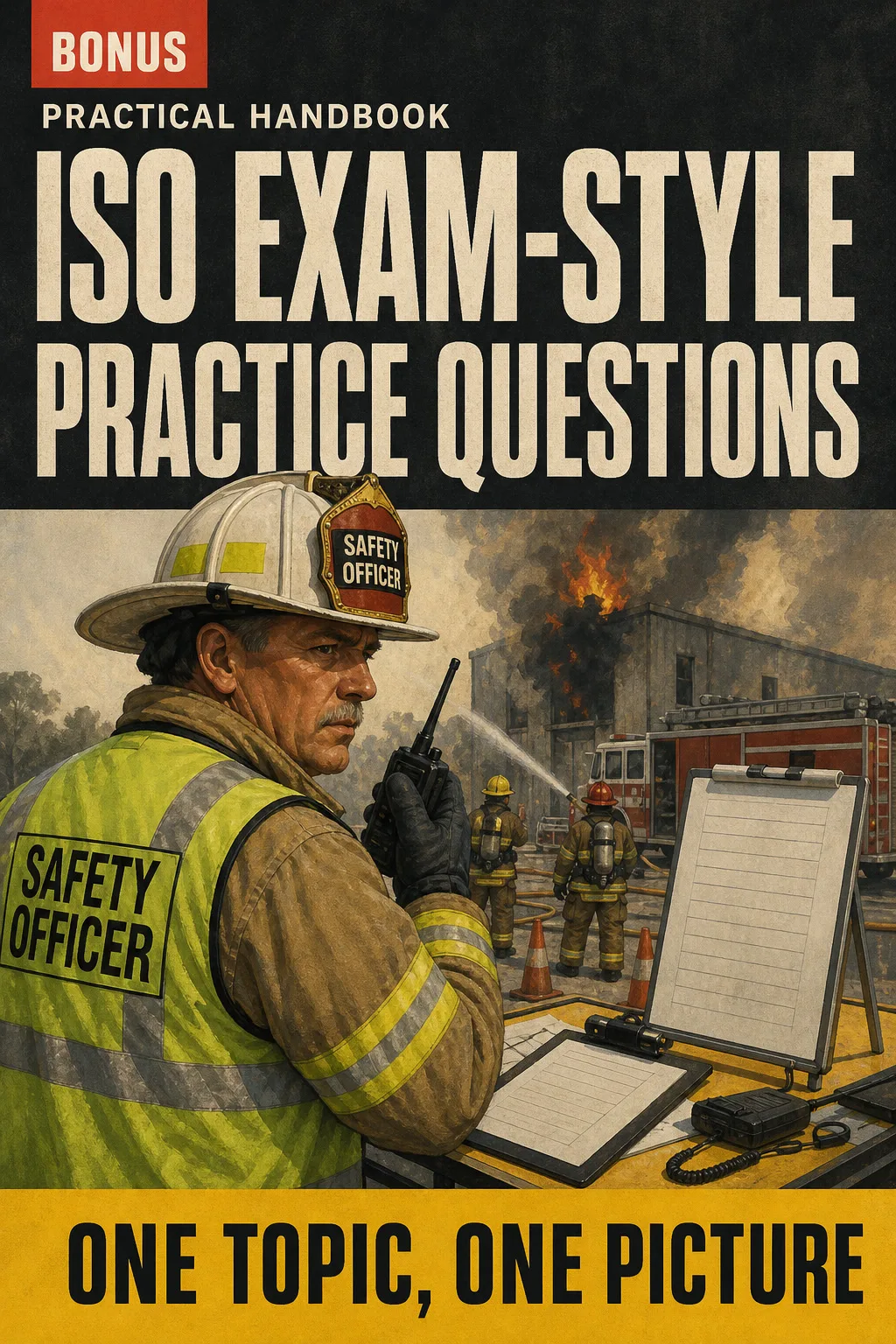
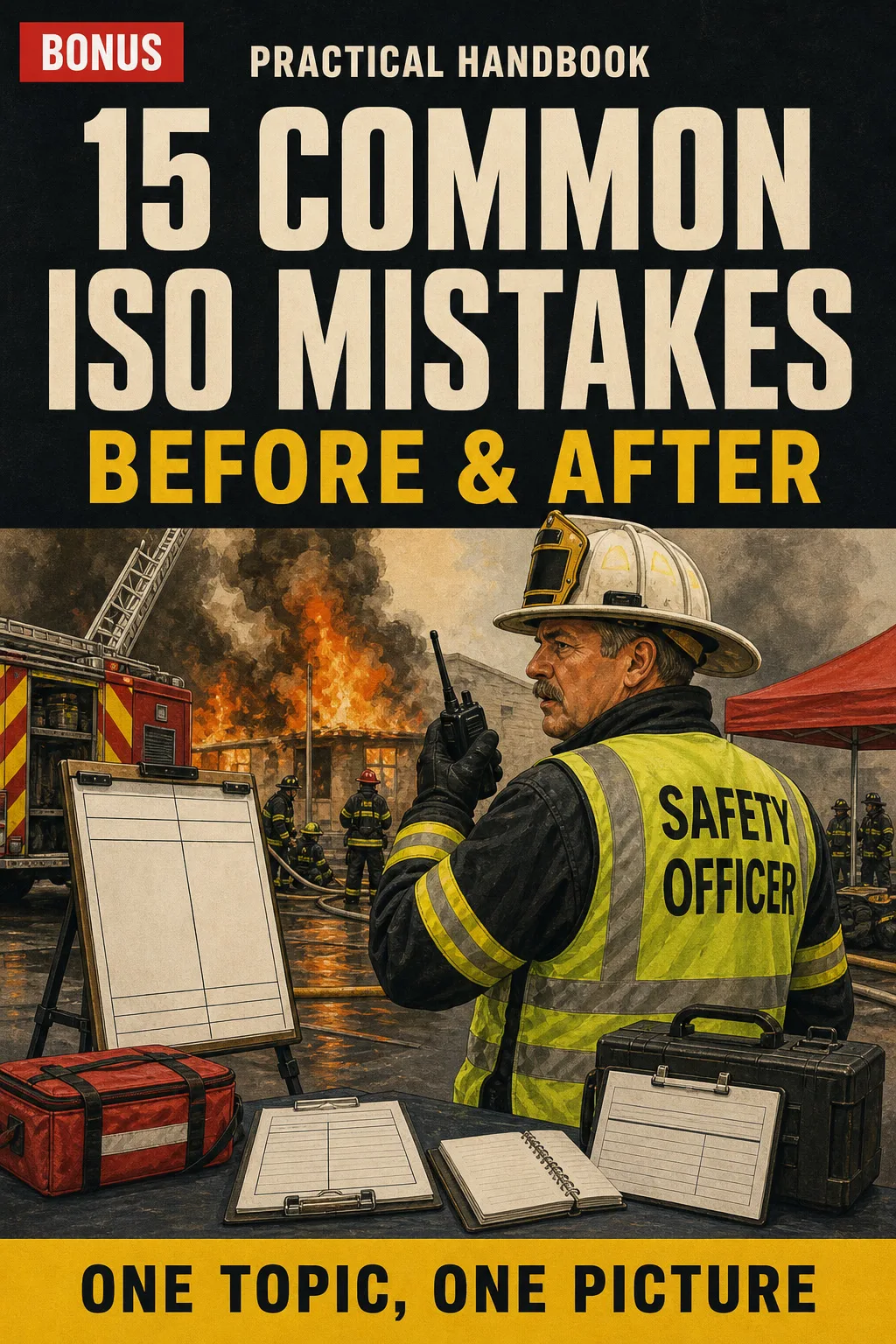
The ISO inside incident command, risk management, reading the building, collapse indicators and zones, smoke and fire behavior, accountability and rehab, special scenes and the post-incident review: 62 pages, all illustrated.
Think of it this way:
You're the ISO on a working fire in an old two-story ordinary-construction building. The IC keys up and asks you for a collapse zone. You've got seconds, and no textbook.
You studied the collapse zone page, so that's what you see: the building drawn from above, the wall height, the zone marked out at one and a half times that height, and the tape line crews stay behind. You give the IC the zone without reaching for anything.

Same with smoke reading, the IAFC rules of engagement, PAR, RIC and hazmat zones: each one on its own page.
Incident Safety Officer Illustrated is 8 parts and 58 topics, all drawn, with a one-page size-up map, the key numbers and a 10-minute pre-exam review at the end.
What you see drawn, you don't have to memorize.
Where the ISO sits on the ICS chart and when you can alter, suspend or terminate an action, so you know your authority before anyone asks. Also: health & safety officer vs. ISO, positioning and assistant safety officers.
Risk vs. benefit in three lines, the IAFC rules of engagement, offensive, defensive and transitional, the risk management cycle, two-in/two-out and tunnel vision.
The five construction types side by side, Type I to Type V with their NFPA 220 codes, so you can name a building and know how it behaves under fire. Also: balloon vs. platform frame, lightweight engineered construction, loads and connections.
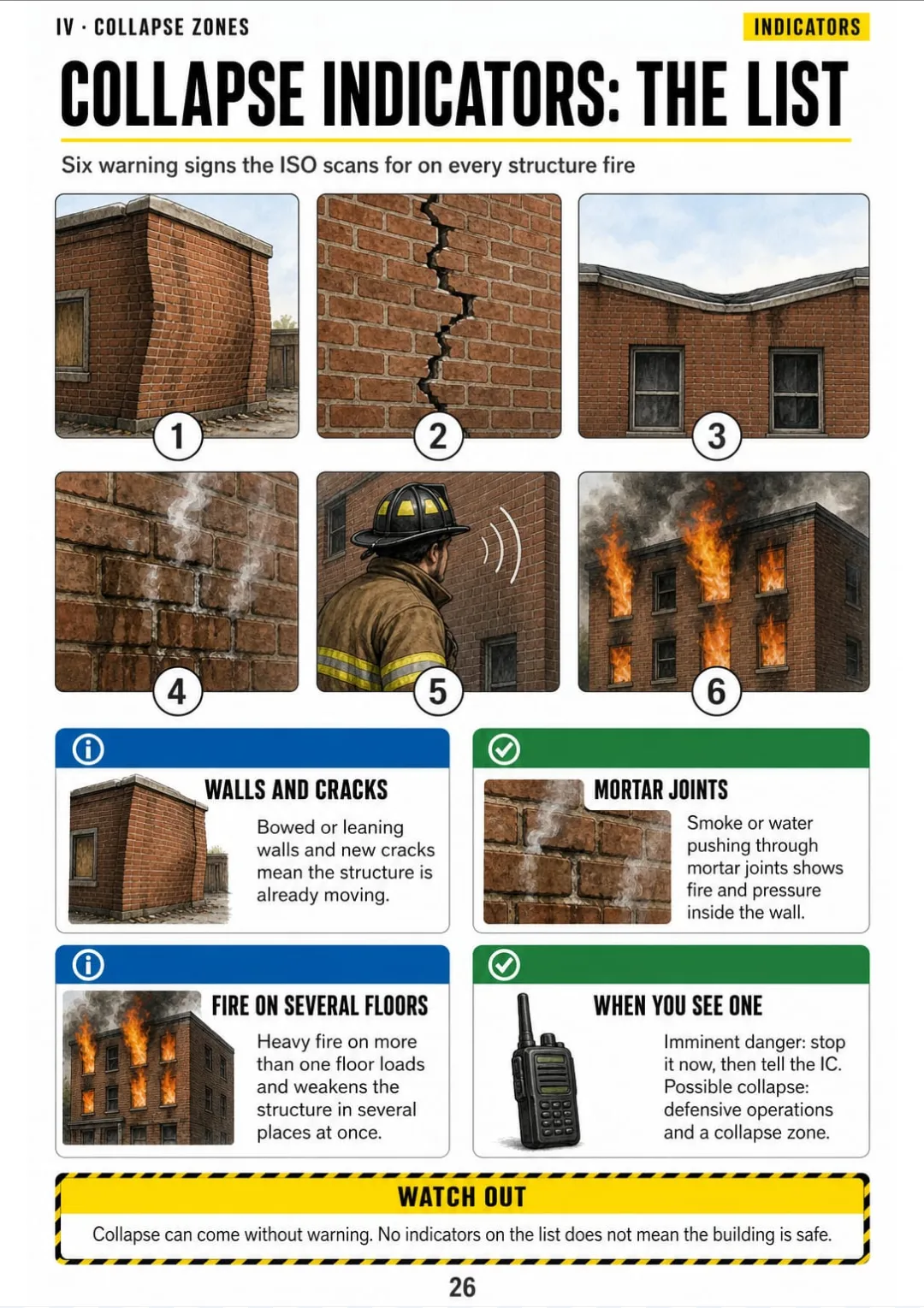
The list of collapse indicators, time and fire load, roof and floor signs, parapets and facades, setting the collapse zone and enforcing it.
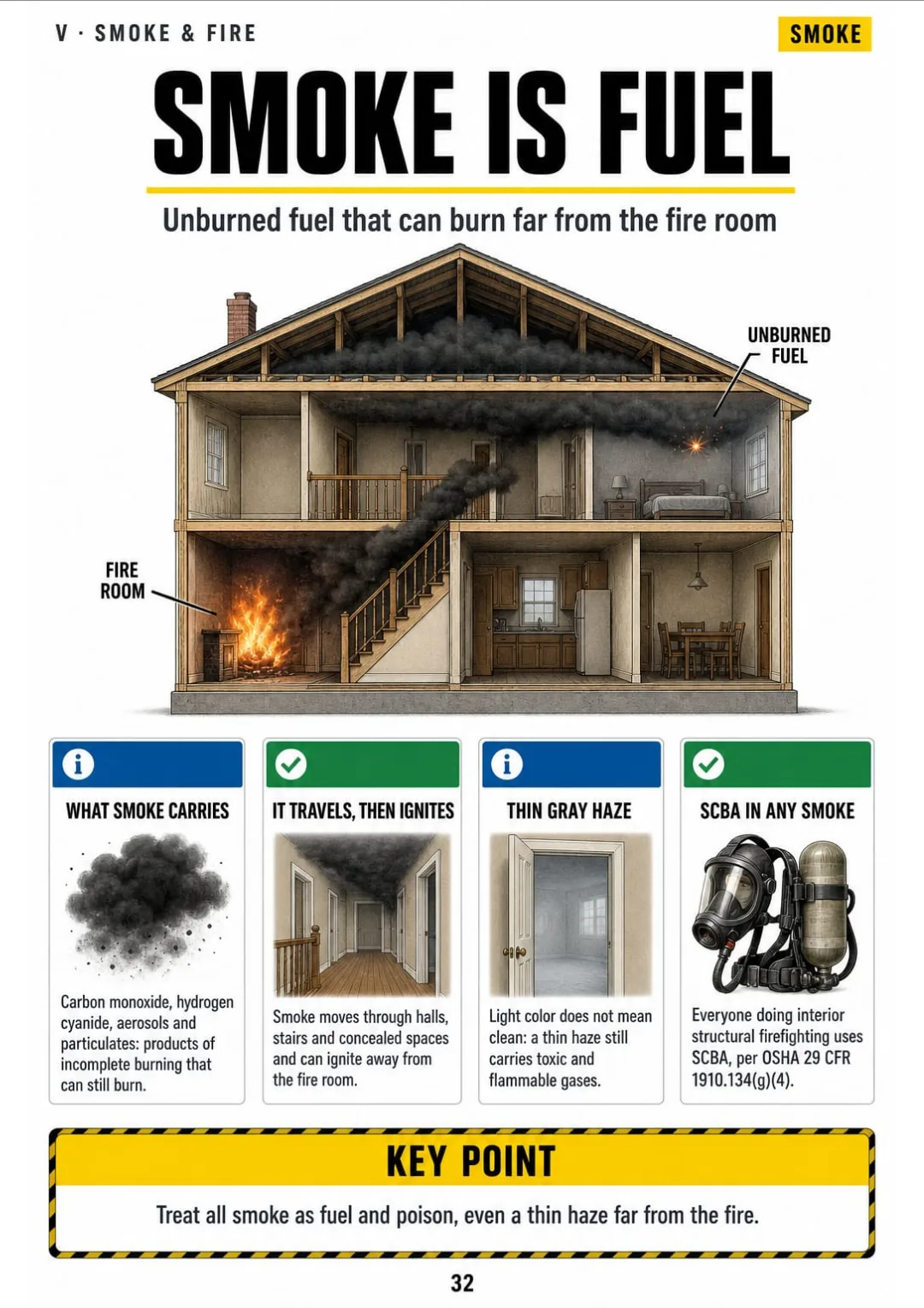
Smoke as fuel, volume, velocity, density and color, flow path, flashover and backdraft warning signs, and wind-driven fires.
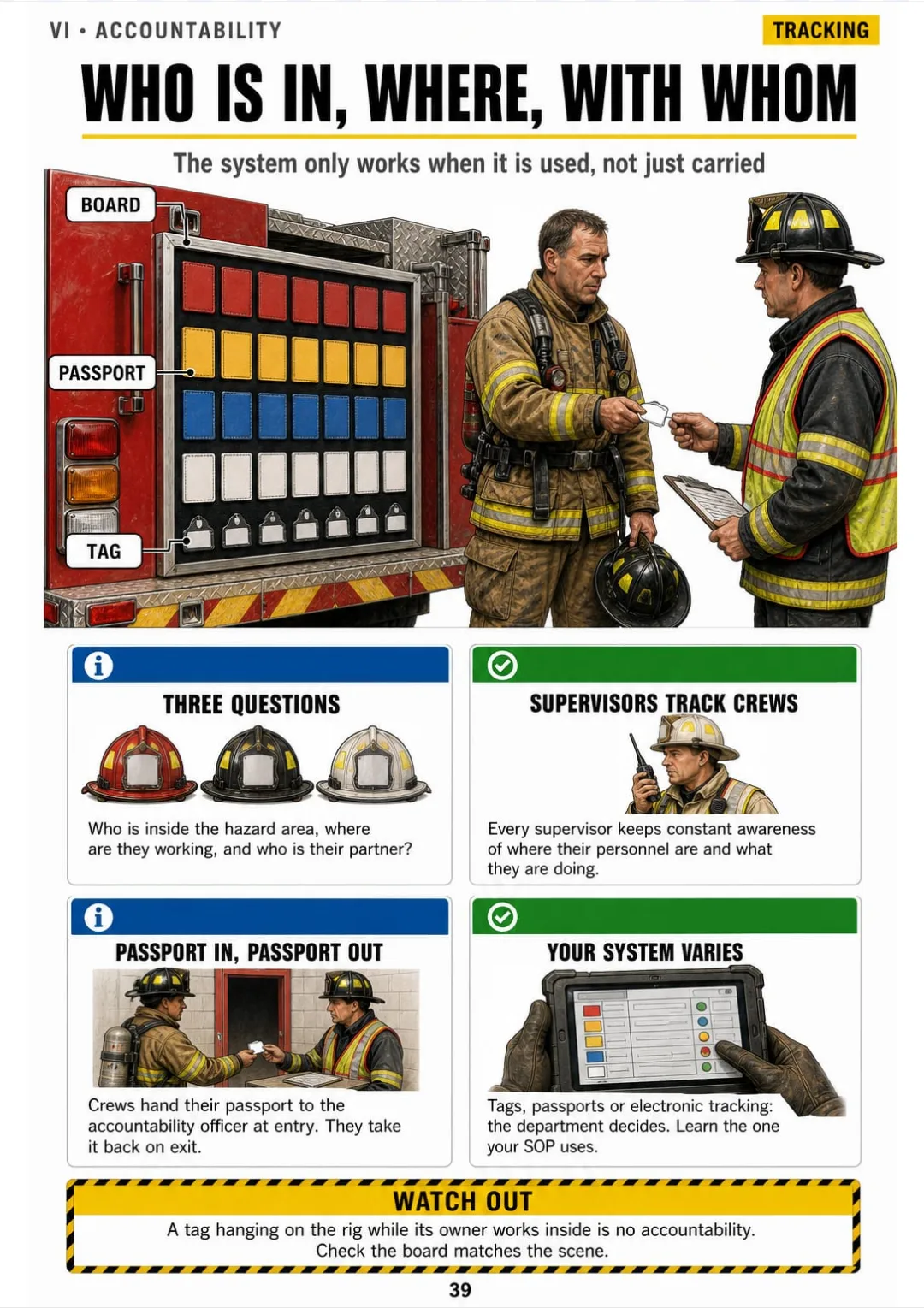
Accountability systems, when to call a PAR, Mayday and LUNAR, rapid intervention crews, air management, rehab, heat stress, cardiac events and CO.
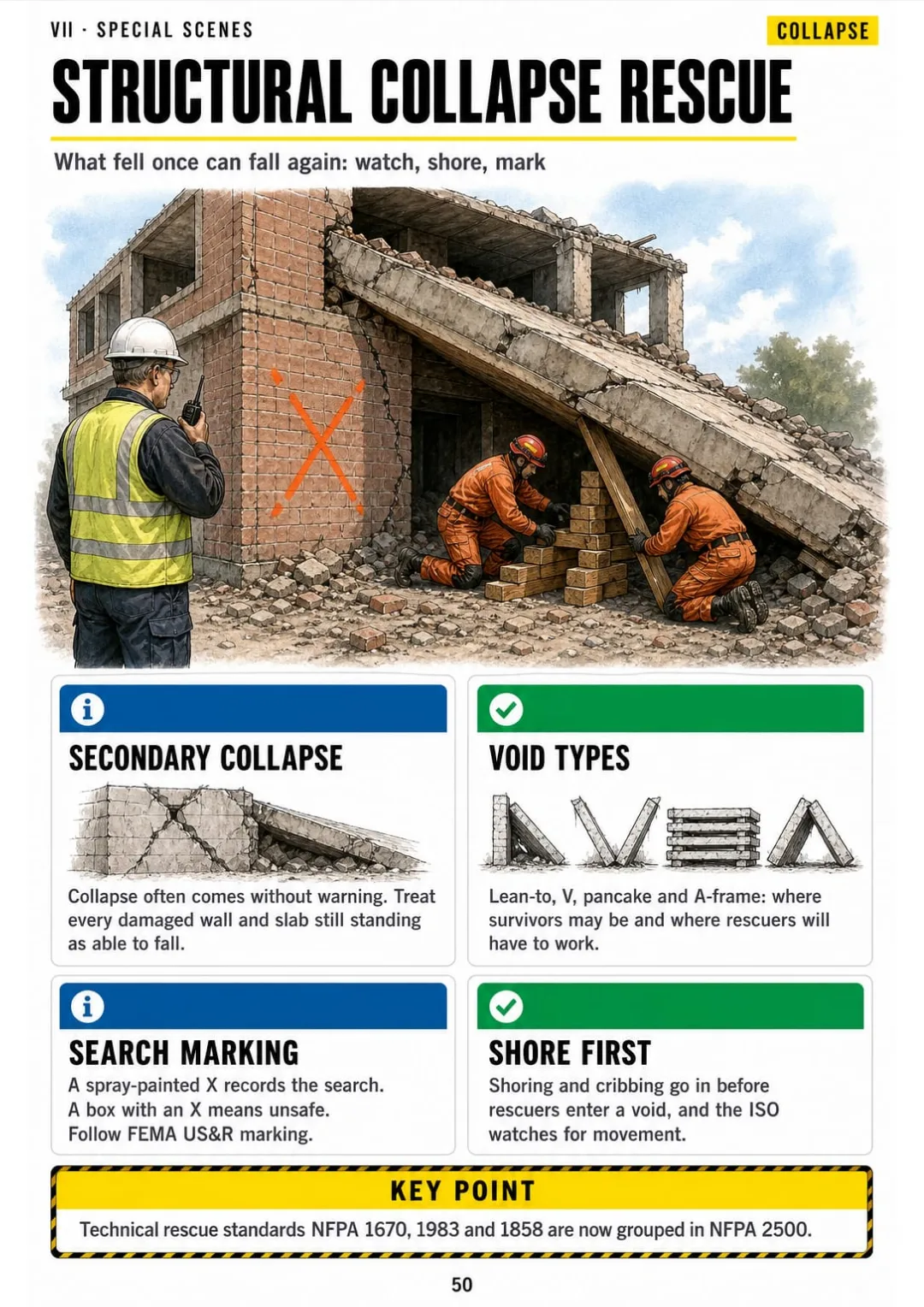
Hazmat zones and PPE levels, trench, confined space, structural collapse, water and rope rescue, wildland LCES, highway incidents and utilities.
The incident safety plan and ICS forms, injuries and near-misses, post-incident analysis, NIOSH line-of-duty death reports, the one-page size-up map, key numbers and the 10-minute review.
At the end of the book: A one-page size-up map, the key numbers at hand, words that get mixed up and a 10-minute pre-exam review.

Test yourself chapter by chapter with exam-style questions, each with the answer explained and the page to review, so you know what you've got down and what needs another look.

See the 15 mistakes most often made in the ISO role, each drawn side by side with the right call, so you don't repeat them on the exam or on the fireground.
📄 This is a digital PDF book sent to your email: nothing is printed or shipped.
PDF by email: We email you Incident Safety Officer Illustrated as a PDF, together with the two free books. It's a single payment: no installments, no extra charges.
Every topic in the course has its own drawn page, so what you read after a shift has a picture to hang on.
The one-page size-up map, the key numbers and the 10-minute review let you go over the whole job the night before. The exam-style questions show you what still needs another look.
Print the pages you use most and keep them in the rig: construction types, collapse indicators, smoke, PAR, always in the same order.
📄 This is a digital PDF book sent to your email: nothing is printed or shipped.
Try Incident Safety Officer Illustrated for 30 days, bonus books included.
We refund everything if the file won't open, if the book isn't what you see here, if you were charged twice or if the email doesn't arrive. Just email us.
You pay once. No subscriptions.
Yes. It won't explain what a hose line is. It takes the ISO course topics and puts each one on a drawn page, so you can put what you already know in order and review it fast.
It's cross-checked against NFPA 1550 (2024 edition, which incorporated NFPA 1521 and NFPA 1561), NFPA 1500 and FEMA's NIMS/ICS. If your course textbook still cites NFPA 1521, ask your academy which edition the exam follows, and use the book next to your course material.
No. It's an independent study guide, not affiliated with NFPA, Pro Board, IFSAC or any state fire academy. It doesn't give you a certificate or CE hours: certification comes from your academy's ISO exam.
No. It goes alongside the official course, your department's SOPs and hands-on training. It helps you study and review.
No. They're exam-style questions written for this book, each with the answer explained and the page to review. They aren't official questions from any exam.
The book and the 2 bonus books come as PDFs by email, to the address you enter at checkout.
No. It's a one-time payment.
Yes. It's a printable PDF: print the whole book or just the pages you want to keep in the rig.
You have 30 days. We refund everything if the file won't open, if the book isn't what you see on this page, if you were charged twice or if the email doesn't arrive: just email us.
No more rereading with nothing to show for it.
The five construction types: you see them drawn, and you've got them.
You walk into the exam knowing where everything is.
Drawings make studying faster.
The book is right below.
One-time payment: US$ 27 · Guarantee: 30 days · PDF by email
YES, I WANT INCIDENT SAFETY OFFICER ILLUSTRATED FOR US$ 27📄 This is a digital PDF book sent to your email: nothing is printed or shipped.